Apple M5 rumors

But yeah as others have said, you don't need the MagSafe 3 cable for charging. It has benefits, being MagSafe for one so it's harder to step on the cable and knock the laptop on the floor. It also means you don't use up a USB port. But all the USB-C ports can be used for charging. In fact, the MagSafe 3 connector uses the same system as USB Power Delivery just without any of the data lanes for USB

I'm wondering, how does apple update the firmware of the magsafe cable without any (usb?) data lanes? is there a different data connection?
 
I'm wondering, how does apple update the firmware of the magsafe cable without any (usb?) data lanes? is there a different data connection?

I’m actually not sure in that one. It’s possible there’s something else there or maybe just a very small subset of usb database
According to Wiki the center pin carrys data for the magsafe end itself. Though it does mention that that data line does not go to the charging brick.
 
According to Wiki the center pin carrys data for the magsafe end itself. Though it does mention that that data line does not go to the charging brick.
I think that must be an old wiki with information on Magsafe 1/2. In 1&2, the cable between the Magsafe cable head and the charger brick has just 2 conductors, power and ground. The five pins on the Magsafe 1/2 connector are two power, two ground, and a 1-wire serial interface to an ID chip inside the Magsafe cable head. That chip's only functions are to let the computer know the charger's serial number and capabilities, and allow the computer to turn one of the LEDs (green or orange) on.

In Magsafe 1&2, the computer controls the charger indirectly. The charger defaults to outputting a safe low voltage at low maximum current. What it's looking for is for a computer on the other end to attach a load resistor of a known value for some "long" period of time (probably about a second). Once it sees this indirect signal, it changes into the higher-voltage full power mode. While in full-power, if it sees the load go open circuit, it switches back to the low voltage mode.

This scheme makes the exposed pins in the Magsafe connector safe. By default there's no high voltage present, so it can't injure people or start fires. It also makes the system pretty cheap, because the charger can be fairly dumb and the one and only chip in the cable is basically just a ROM that the computer can read.

Magsafe 3 is quite different, because now there's USB-C Power Delivery involved, at least in the middle. The charger is a standard USB-C PD power source, and Apple provides you with a USB-C to Magsafe 3 cable. That cable has to be an e-Marker Type C cable in order to support high power USB-C modes. A youtube channel did a teardown of this cable a while back:


These cables look quite complex. Both the USB-C and Magsafe connector backshells contain fairly complex active circuitry, and there are data wires in the cable, not just power and ground.

On a few occasions (including just now) I've tried searching to find out whether anyone's reverse engineered the signal connections in the Magsafe 3 cable, but I've never found anything. However, I think it's possible (and maybe even likely) that Apple enabled PD handshaking all the way to the computer. If they'd kept the Magsafe 3 connector the same as before (2 power, 2 ground, 1-wire serial, use of sense resistor to turn the power supply on) there'd be no need to have data wires in the cable, and the circuitry in the Magsafe backshell would be simpler.
 
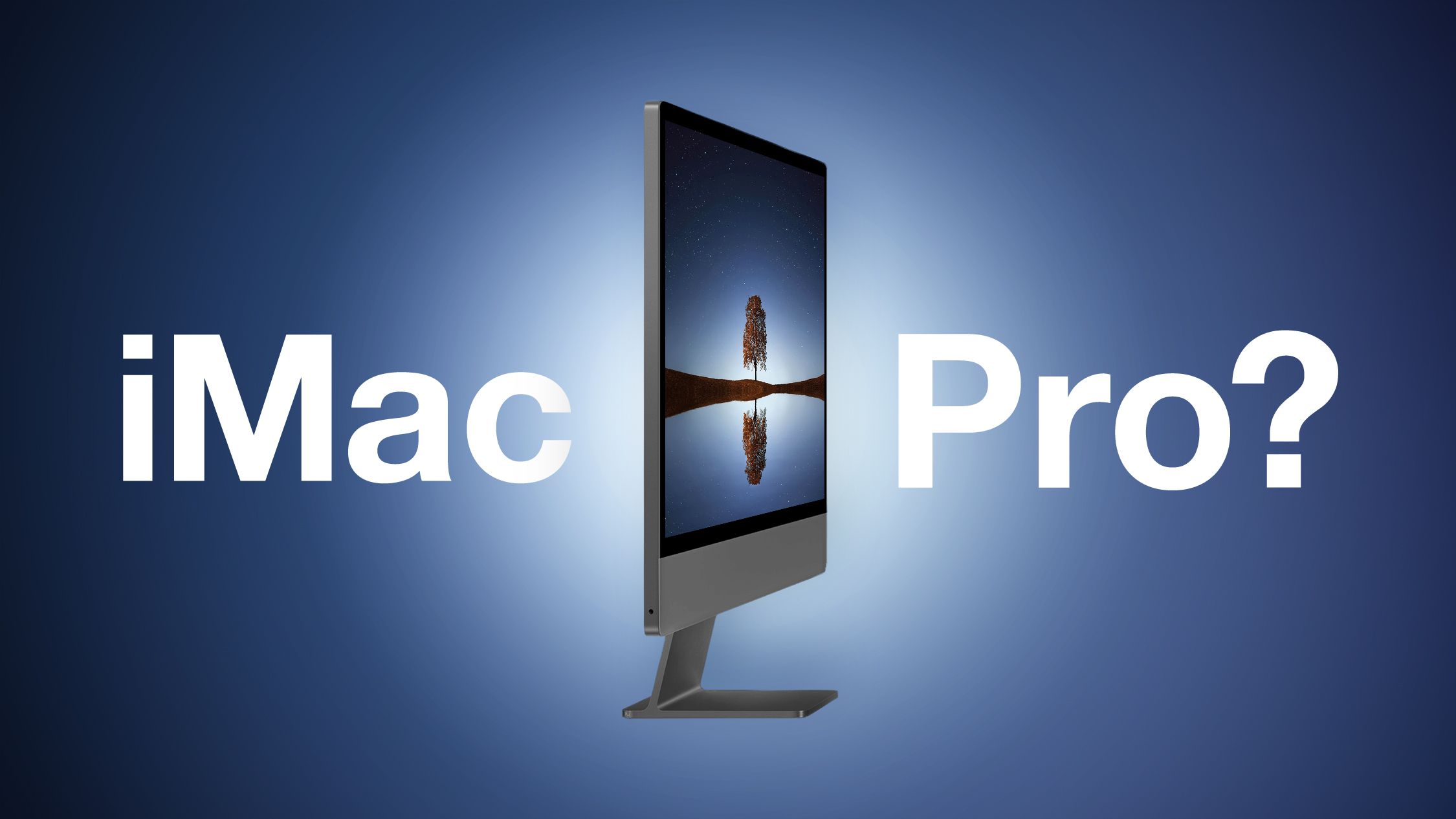
Less "rumor" and more straight up leak covering everything from upcoming Macs with M5s to the start of the M6s (as well as other chips and devices) and a few unexpected or less expected nuggets (like the rumored return of the big iMac*) and as-of-yet-unknown device IDs:


*the big iMac likely coming soon is a pleasant surprise: while there were previous rumors of them working on such a thing, it wasn't clear when or if it would see the light of day. Hopefully the Mac desktop market is big enough that it can support both this new iMac Pro and the Max Studio/mini Pro. Thoughts on size? 30"? 32"? Probably bigger than 27" I would think since the smaller one is 24" and the rumors indicated so as well if I remember correctly. My pretty safe guess is that unlike the smaller iMac which has no analog, Apple will try to share the same screen as one of the upcoming Studio displays to increase volume of that particular component. Of course not everything on this list may show up (there are already a couple of rumored-to-be canceled or delayed items), but most will.
 
Last edited:
Less "rumor" and more straight up leak covering everything from upcoming Macs with M5s to the start of the M6s (as well as other chips and devices) and a few unexpected or less expected nuggets (like the rumored return of the big iMac*) and as-of-yet-unknown device IDs:


*the big iMac likely coming soon is a pleasant surprise: while there were previous rumors of them working on such a thing, it wasn't clear when or if it would see the light of day. Hopefully the Mac desktop market is big enough that it can support both this new iMac Pro and the Max Studio/mini Pro. Thoughts on size? 30"? 32"? Probably bigger than 27" I would think since the smaller one is 24" and the rumors indicated so as well if I remember correctly. My pretty safe guess is that unlike the smaller iMac which has no analog, Apple will try to share the same screen as one of the upcoming Studio displays to increase volume of that particular component. Of course not everything on this list may show up (there are already a couple of rumored-to-be canceled or delayed items), but most will.
Good news for iMac lovers! Personally I prefer the Studio or Mini + external display but choice is good.

I do remain underwhelmed by Apple’s desktop strategy. It was only a couple of years ago that they were pushing the idea that uber iMacs were a bad choice because you potentially wasted a fine display when updating. Now that isn’t the case? It feels like they don’t have a clear vision for the desktop line. Sadly most desktop fans just want boring regular updates but I don’t think that’s coming.
 
I do remain underwhelmed by Apple’s desktop strategy. It was only a couple of years ago that they were pushing the idea that uber iMacs were a bad choice because you potentially wasted a fine display when updating. Now that isn’t the case? It feels like they don’t have a clear vision for the desktop line

So you're saying both choice is good /this is a good thing... and it's not a good thing?

You're not alone in saying that, which is why Apple remains perplexed what people actually want, because mixed messaging from consumers is confusing.

Also I don't agree, but that's obvious.
 
Last edited:
So you're saying both choice is good and this is a good thing... and it's not a good thing?

You're not alone in saying that, which is why Apple remains perplexed what people actually want, because mixed messaging from consumers is confusing.

Also I don't agree, but that's obvious.
No. I’m saying choice is a good thing and consistency is also a good thing. Apple aren’t perplexed. They just don’t care about desktops as much as I would like them to.

Having a big iMac with a powerful soc is a good thing. Having a separate desktop which can be plugged into a monitor of your choice is also a good thing.

Telling people that the iMac Pro is a good thing, then saying separate components (computer and monitor) is the way forward a few years later, then saying: no...big iMacs are good, oh and we may skip the Ultra on the Studio if and when we decide to…a couple of years later, is suboptimal to people, like me, who prefer desktops.
 
No. I’m saying choice is a good thing and consistency is also a good thing. Apple aren’t perplexed. They just don’t care about desktops as much as I would like them to.
No.

You specifically called out Apple's 'inconsistency' as them "not having a clear vision" the product line.

I don't believe too much choice is good. Pick one or the other.

Claiming both choice is good between vastly different desktop philosophies for a singular product so people agree with you, then also saying Apple has no vision for the desktop because they might shift to giving you that choice...That's trying to have it both ways here, which is furthering this issue.

You either want them to develop and sell they have now; or you want them to offer both iMac and a dedicated desktop with a display, each with the same chip configurations. You claim that's what you want, but then you criticize Apple for possibly adjusting their plans to give that to you.

Why exactly are you both praising Apple for supposedly making those products, and then criticizing them for it at the same time? You should be defending their possible choice to instead shift to that.

And with due respect, the desktop is a very small business for them. The Mac earned $ 30 billion in 1 year, and the desktop accounts for 10 %, which means they earned $3 billion around that, when overall they earned over $400 billion in 1 year alone.

That combined with the ever confusing "wants" of the "pro" (social media prosumers, honestly) community, I don't blame them for adjusting it every once in awhile. It's entirely confusing to me, so I can't imagine it's much more clear to them.

This is likely why they haven't discontinued the Mac Pro yet, because while next to no one buys it or has reason to buy it, if they discontinue it people will bitch forever.

Honestly, I couldn't care less about what people want at this point, personally, because no one is consistent. It makes it hard to agree with anything, quite frankly. I enjoy what they have right now, and I look forward to what higher end M5 chips are going to bring!

 
Last edited:
The rumored low cost MacBook with an iPhone chip is an interesting potential device. Just doing a quick and dirty comparison with the original M1 (which many people still rock) and you can see why Apple chose the A18Pro:

Geekbench 6 STGeekbench 6 MTSteel Nomad LightWildlife ExtremeSolar Bay Extreme
iPhone16 Pro (A18 Pro)34438605171947521287
M1 Mini2366844119744941410

Obviously the last GPU test is a little bit cheeky since I doubt the users of a cheap Mac with the A18 Pro will be doing a huge amount of substantial ray tracing, but it does highlight the how the capabilities of Apple GPUs have evolved (A19 Pro would be even better in the GPU across the board and especially ray tracing, but the A18 Pro will keep costs down). In all other respects, Apple is effectively set to release an M1 Air again at a much cheaper (to be determined) price point (and snappier ST performance, always nice).

I could really see this as an education device to compete with chromebooks. While Apple may not sell it at the lowest chromebook prices you can find, it would be far more capable offline (and less intrusive) and no doubt there would be bulk and educator discounts. It would also just be good for a kid's first laptop (depending on the kid of course) and anyone who just needs a lightweight cheap portable Mac and would prefer this over an iPad. Of course the success of a new product is hard to determine, but I can definitely see why Apple is experimenting with releasing a cheap Mac with such a chip. They may have built their brand off of premium devices, but there could be a real opening here with their phone chips being so capable. A lot will depend on everything around the chip as well - it ain't only about the performance.
 
Last edited:
If it's real, it'll be interesting to see if there's a frequency bump over A18 Pro iPhones. So far, in the same generation, A-series chips always run CPU and GPU cores at lower clocks than M-series, but this doesn't necessarily mean A-series cannot hit such freqs. After all, it's likely that Apple is reusing the same physical design for CPU and GPU cores, so they may be sandbagging A-series frequencies a bit to save power.
 
Huh ... so the MacBook Neo is NOT 17,1 or 17,2 it's 17,5. That still leaves the 17,1/2 machines that were referenced in that leak unaccounted for (and were the first 17-class machines referenced):

 
The rumored low cost MacBook with an iPhone chip is an interesting potential device. Just doing a quick and dirty comparison with the original M1 (which many people still rock) and you can see why Apple chose the A18Pro:

Geekbench 6 STGeekbench 6 MTSteel Nomad LightWildlife ExtremeSolar Bay Extreme
iPhone16 Pro (A18 Pro)34438605171947521287
M1 Mini2366844119744941410

Obviously the last GPU test is a little bit cheeky since I doubt the users of a cheap Mac with the A18 Pro will be doing a huge amount of substantial ray tracing, but it does highlight the how the capabilities of Apple GPUs have evolved (A19 Pro would be even better in the GPU across the board and especially ray tracing, but the A18 Pro will keep costs down). In all other respects, Apple is effectively set to release an M1 Air again at a much cheaper (to be determined) price point (and snappier ST performance, always nice).

I could really see this as an education device to compete with chromebooks. While Apple may not sell it at the lowest chromebook prices you can find, it would be far more capable offline (and less intrusive) and no doubt there would be bulk and educator discounts. It would also just be good for a kid's first laptop (depending on the kid of course) and anyone who just needs a lightweight cheap portable Mac and would prefer this over an iPad. Of course the success of a new product is hard to determine, but I can definitely see why Apple is experimenting with releasing a cheap Mac with such a chip. They may have built their brand off of premium devices, but there could be a real opening here with their phone chips being so capable. A lot will depend on everything around the chip as well - it ain't only about the performance.
how fast does it run chess benchmarks?

(i don’t care)
 
Huh ... so the MacBook Neo is NOT 17,1 or 17,2 it's 17,5. That still leaves the 17,1/2 machines that were referenced in that leak unaccounted for (and were the first 17-class machines referenced):


Oops small mistake on my part 17,2 was released, it’s the M5 MBP 14”. It’s just the 17,1 that’s missing.

 
Screenshot 2026-03-08 at 6.44.00 PM.png


Base M5 GPU analysis: This comes from NotebookCheck running CP2077 (now native to macOS) with load-only power (i.e. load - idle). As we can see, the M5 is a massive upgrade over the M4 in the MB Air, however performance increases quickly diminish with increasing power - the 15" Air is ~66% more efficient than the MBP. While the 10-core M5 in the 14" MBP is by no means inefficient, it can't keep up with the larger B390 with its 2 extra cores in terms of performance/efficiency. Of course, as discussed in the Panther Lake-H analysis, that chip straddles the base-Pro divide for Apple processors and no processor measured even attempts to operate in the power regime of the Air (again which loses far less performance than you might think). The 10-core M5 is only 15% more performant than the 8-core while using 25% more power. At first glance this might be surprising, but I've noticed this pattern throughout Apple's GPUs across different generations and tiers where the binned GPU performs much better than expected (or conversely the full GPU performs worse than expected). Part of it may be that memory bandwidth isn't always binned, but if memory serves this appears to be true even when it is.
 
Last edited:
View attachment 38308

Base M5 GPU analysis: This comes from NotebookCheck running CP2077 (now native to macOS) with load-only power (i.e. load - idle). As we can see, the M5 is a massive upgrade over the M4 in the MB Air, however performance increases quickly diminish with increasing power - the 15" Air is ~66% more efficient than the MBP. While the 10-core M5 in the 14" MBP is by no means inefficient, it can't keep up with the larger B390 with its 2 extra cores in terms of performance/efficiency. Of course, as discussed in the Panther Lake-H analysis, that chip straddles the base-Pro divide for Apple processors and no processor measured even attempts to operate in the power regime of the Air (again which loses far less performance than you might think). The 10-core M5 is only 15% more performant than the 8-core while using 25% more power. At first glance this might be surprising, but I've noticed this pattern throughout Apple's GPUs across different generations and tiers where the binned GPU performs much better than expected (or conversely the full GPU performs worse than expected). Part of it may be that memory bandwidth isn't always binned, but if memory serves this appears to be true even when it is.
Oof. That is a huge loss in efficiency from the Air to the MBP. Honestly never noticed that before. Or if I did, I forgot!
 
Oof. That is a huge loss in efficiency from the Air to the MBP. Honestly never noticed that before. Or if I did, I forgot!

Previously CP2077 wasn’t native (neither was Notebookcheck’s previous benchmark TW3), so it’s possible it didn’t show up as much or losses were primarily attributed to that lack of native performance. The only native measurements for the Mac are the ones pictured. Also previous to the M4, the MBP/mini weren’t allowed to run the base chip at higher performance levels. I mean the M4 CPU loses >40% efficiency going from Air to MBP, it's just that it's still super efficient! :) To be fair, the MBP M5's GPU is still competitive in efficiency, it's just beaten out by an Intel GPU with 20% more cores/ALUs, but when compared to the AMD chip and older (and to be fair, even smaller) Intel chips, it's pretty good.
 
Back
Top