@exoticspice1 are you able to do this again when you have the chance? If not that's fine, but I'd love if you can testCan you test the same test using automatic power mode, charged 100% (like you did before)?

You are using an out of date browser. It may not display this or other websites correctly.
You should upgrade or use an alternative browser.
You should upgrade or use an alternative browser.
M5 Pro and Max unveiled
- Thread starter leman
- Start date
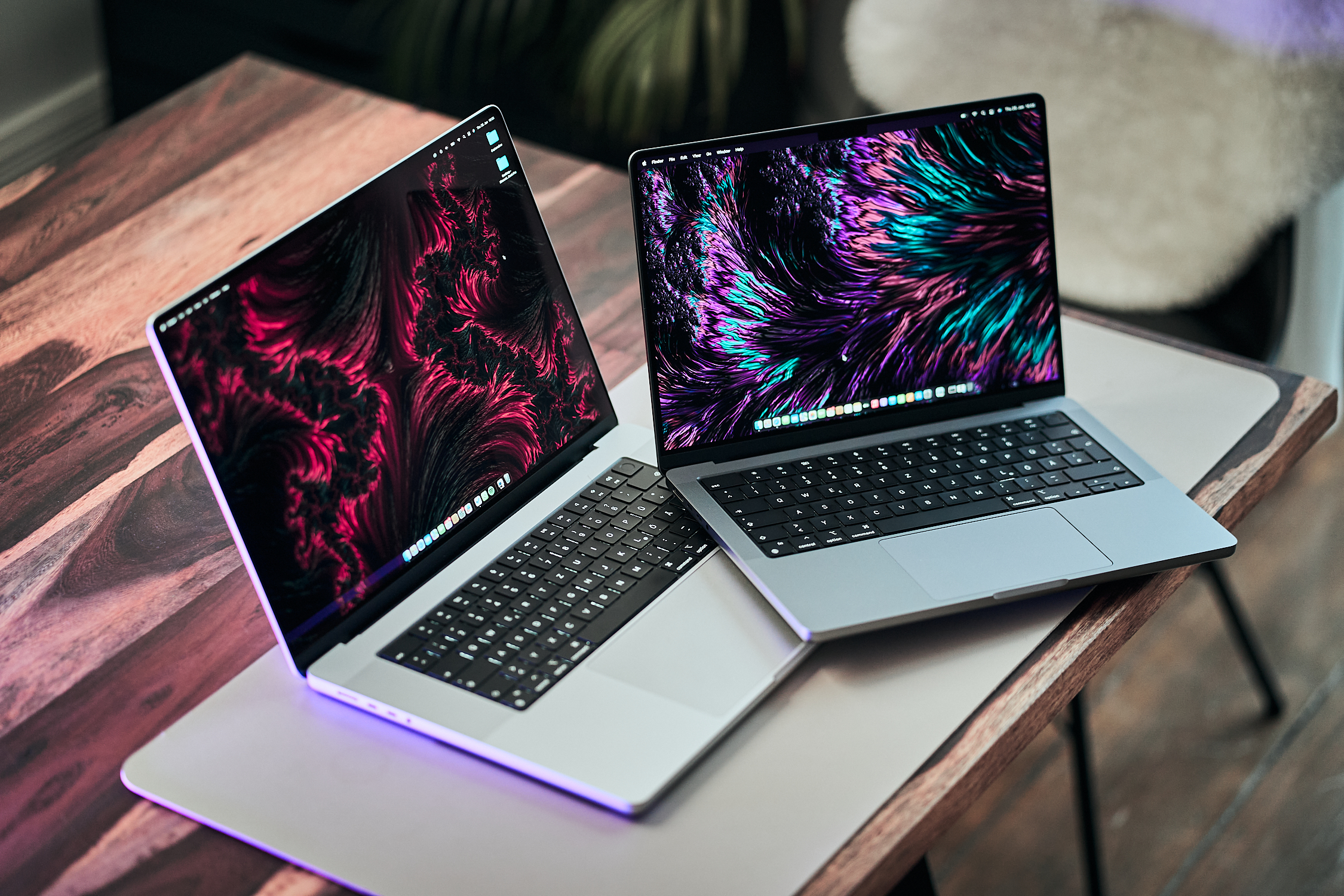
Apple's M5 Max in the MacBook Pro 16 is around 15 % faster compared to the MacBook Pro 14
Apple's new M5 Max SoC shows its full potential in the larger MacBook Pro 16 and the performance is noticeably better compared to the MacBook Pro 14. The performance is also stable, and the fans are quieter at the same time.
 www.notebookcheck.net
NBC added PugetBench results to their reviews. As they say the M5 Pro/Max are absolute beasts in Pugetbench.
What I like about this chart in particular is that is that you can which of these tests respond most to the GPU by the difference between the Max and Pro chips even with the thermal throttling from 14" form factor in the former. Now I have to admit, I'm not very familiar with the inner workings of these benchmarks, but I get the sense most of these are mixed used benches/collection of subtest tests. Given that the PC with the 5090 can only catch the Pro (never mind Max) I'm guessing even those tests which have more GPU components are still heavily weighted towards the CPU. The only CPU in this list anywhere close to the 18-core M5 is the Strix Halo and its GPU simply cannot compete here. The only competitive PC with the Max would probably be Fire Range/275HX to try to close the CPU gap with a RTX 5080 or higher to maintain GPU scores. As you can imagine the power requirements of such a combo are extreme for a laptop.

exoticspice1
Site Champ
- Joined
- Jul 19, 2022
- Posts
- 457
@RockRock8 I returned the 16”, great laptop but there is some software issues regarding the CPU scheduling issue in some apps. I was never able to get the full the performance of the M5 Pro CPU in apps like Handbrake as it looks like Apple is super aggressive with clocks on the super cores but only on the M5 Pro ( the max doesn’t have this issue, it does clock lower after a while but not as aggressive as M5 Pro)
It just didn’t feel fully complete firmware wise for me. Seems like this was their test bed and the M6 generation will get better software polish with things learnt from the M5 Pro/Max generation.
It just didn’t feel fully complete firmware wise for me. Seems like this was their test bed and the M6 generation will get better software polish with things learnt from the M5 Pro/Max generation.
exoticspice1
Site Champ
- Joined
- Jul 19, 2022
- Posts
- 457
I do hope we get better cooling in MBP M6 Pro/Max. I have reason to believe we will as the engineering team is now more focused on thermals as seen with 17 Pro.

- Joined
- Sep 26, 2021
- Posts
- 8,271
- Main Camera
- Sony
Seems like the next MBP will likely have a new chassis.I do hope we get better cooling in MBP M6 Pro/Max. I have reason to believe we will as the engineering team is now more focused on thermals as seen with 17 Pro.

- Joined
- Nov 29, 2021
- Posts
- 563
I don't know; 2021 onwards MBPs have been the best cooled MacBooks Pro in like 2 decades or more. I can push my M1 Max or M4 Pro full CPU+GPU workload and only when both are stessed to the max do I get anywhere near max fan speed, and the chip is kept at ~95C. On a CPU only workload, like when I compile and run both Android Studio and Xcode simultaneously, fan speed only goes to ~2000RPM and the chip is kept at 80C.I do hope we get better cooling in MBP M6 Pro/Max. I have reason to believe we will as the engineering team is now more focused on thermals as seen with 17 Pro.
Yes my Mac Studio keeps the M4 Max cooler and with less audible fan spin but the 16" laptop performs quite well in cooling IMO. And I doubt it'll get better, I actually fear it'll get worse as there have been some complaints of the 2021+ MBP lineup being too heavy and thick for people's liking although I love it. I wouldn't be surprised if the chassis of the M6 generation gets closer to that of the 2016 era again - Not quite the same or as thin, but in that direction.
I don't know; 2021 onwards MBPs have been the best cooled MacBooks Pro in like 2 decades or more. I can push my M1 Max or M4 Pro full CPU+GPU workload and only when both are stessed to the max do I get anywhere near max fan speed, and the chip is kept at ~95C. On a CPU only workload, like when I compile and run both Android Studio and Xcode simultaneously, fan speed only goes to ~2000RPM and the chip is kept at 80C.
Oh absolutely, but the thermal design is getting long in the tooth relative to the power requirements. The 16" seems to handle its loads okay (well @exoticspice1 didn't find so, but maybe that's firmware teething issue) - the 14" though, not so much. And the Mx Max has only increased in power draw over the generations. Recent chips are still as or more efficient, but the max power draws have gone up. Apple may be able to issue some fixes for this generation a la the iPhone 15 I think? But a better thermal design will be necessary if Apple keeps pushing.
Yes my Mac Studio keeps the M4 Max cooler and with less audible fan spin but the 16" laptop performs quite well in cooling IMO. And I doubt it'll get better, I actually fear it'll get worse as there have been some complaints of the 2021+ MBP lineup being too heavy and thick for people's liking although I love it. I wouldn't be surprised if the chassis of the M6 generation gets closer to that of the 2016 era again - Not quite the same or as thin, but in that direction.
Hopefully not, or if it does it's because of internal changes that allow Apple to do even better cooling in a smaller chassis.
Last edited:

exoticspice1
Site Champ
- Joined
- Jul 19, 2022
- Posts
- 457
One way for Apple to increase cooling capacity while making the case thinner is with the use of vapour chamber cooling.
MSI has a great post about this.
The 2021 design isn’t suited for the 18 core CPU in M5 Pro, it just isn’t.
MSI has a great post about this.
The 2021 design isn’t suited for the 18 core CPU in M5 Pro, it just isn’t.
Yes, but it's getting worse. I mean the M1 and M2 Max simply didn't draw as much power.Hasn't the 14" Mx Max full die's always have had thermal issues compared to the 16"?
One way for Apple to increase cooling capacity while making the case thinner is with the use of vapour chamber cooling.
MSI has a great post about this.
The 2021 design isn’t suited for the 18 core CPU in M5 Pro, it just isn’t.
Apple has added vapor chamber cooling to the iPhone Pro, so who knows? that may be in the cards for a chassis redesign.
Last edited:
@RockRock8 I returned the 16”, great laptop but there is some software issues regarding the CPU scheduling issue in some apps. I was never able to get the full the performance of the M5 Pro CPU in apps like Handbrake as it looks like Apple is super aggressive with clocks on the super cores but only on the M5 Pro ( the max doesn’t have this issue, it does clock lower after a while but not as aggressive as M5 Pro)
It just didn’t feel fully complete firmware wise for me. Seems like this was their test bed and the M6 generation will get better software polish with things learnt from the M5 Pro/Max generation.
The 2021 design isn’t suited for the 18 core CPU in M5 Pro, it just isn’t
I'm genuinely asking because I want to understand where you're coming from and I want to learn more: where are you getting this from?
I'm not here to argue, I want understand. I've seen the M5 Max in the same 16" chassis beat out an M3 Ultra simultaneously running a transformer model, diffusion model, and 4K video export, and while the tester said the fans were maxed out, it beat it by 1-3 minutes with each of those. So I honestly don't understand how a 16" chassis is too thermally limited for M5 Pro.
To better explain my comment, I saw attest that showed M5 pro in 14" running at 42c external chassis temp vs M5 max in 16" running at 39c external chassis temperatures while running tests. So a M5 Pro should conceivably be even cooler in 16". If there is a genuine issue and yours wasn't a bad chip, then I'm assuming it's a firmware problem that can be fixed.
I am sorry it didn't live up to your needs. What notebook did you have before? Are you planning to submit your complaint to AppleCare? I hope!
Last edited:
I don't think that's really what is going on. It seems likely to be a thermal or power management firmware issue that they need to iron out.One way for Apple to increase cooling capacity while making the case thinner is with the use of vapour chamber cooling.
MSI has a great post about this.
The 2021 design isn’t suited for the 18 core CPU in M5 Pro, it just isn’t.
If anything, things have moved in the opposite direction in terms of how much power the chassis needs to deal with. I've run all-core loads on my 16" M4 Max and, when cold, before a little thermal throttling settles in, it pulls 105W at the magsafe input.
I think M5 Pro/Max 18-core improved on this. Based on the (admittedly not highly trustworthy) numbers that have been floating around, it looks like the M5 P core stayed at around 8W each, much like the M4 P core, while the new M5 M core comes in at about 2.5W each. So this is very handwavy, but that puts us at:
M4 16c = 12*8W + 4*1W = 100W
M5 18c = 6*8W + 12*2.5W = 78W
One of the tradeoffs CPU core designers have to work with is that at the high end of the performance spectrum, every additional performance increment costs more area and power than the previous unit of performance. Mid cores (or what Intel called "efficiency" cores in Alder Lake and its descendants) targeted at lower per-core performance need significantly less area and power per unit performance than the big cores. So this change in Apple's design philosophy is letting them have their cake and eat it too - they are very likely using less area and power to deliver higher CPU performance.
(Not in all circumstances. If you have 12 threads to run, it's possible that M4 16c may run that kind of load faster than M5 18c, because on M4 all 12 threads can run on P cores. However, most loads that can spool up 12 worker threads have little problem scaling to 18, in which case M5 wins.)
I've seen Logic Pro, as I described before, do this:(Not in all circumstances. If you have 12 threads to run, it's possible that M4 16c may run that kind of load faster than M5 18c, because on M4 all 12 threads can run on P cores. However, most loads that can spool up 12 worker threads have little problem scaling to 18, in which case M5 wins.)
I don't know what changed, but something did, because Logic Pro couldn't use HE cores before. So either software needs to be updated to take full advantage of it, which means it's on Handbrake to do so, or something else.No clue if this fan analysis is accurate to the actual architecture, but I will say one thing: the P core in the M5 line up is now able to be taken advantage of just like an S core.
I saw a test in Logic Pro that compared M2 Pro vs M3 Pro, and M4 Pro vs M5 Pro. What's interesting is that Logic Pro usually can only utilize high performance cores. With M5, the P core is now also recognized as a high performance core despite it being the high efficiency in their HP:HE ratio.
The effects are this:
M3 Pro has 5:6 (HP:HE) vs M2 Pro 6:4. M3 Pro can do 10 less tracks in Logic Pro and has 1 less HP core.
M5 Pro has 6:12 vs M4 Pro 8:4. M5 Pro can do 70 more tracks despite have 2 less HP cores.
When I was looking at other tests, it seems this ability for their HE core to be used in the same way as a HP core is completely unique to M5's new P core. So it would be interesting to see what exactly enables that new functionality, because it has dramatic implications for future apps! It's so cool

Jimmyjames
Elite Member
- Joined
- Jul 13, 2022
- Posts
- 1,507
Thanks for this. The Lightroom classic score is weird. Is it possible they mixed the 14” Max and 16” Pro scores, or is it really throttling?View attachment 38416
NBC added PugetBench results to their reviews. As they say the M5 Pro/Max are absolute beasts in Pugetbench.
What I like about this chart in particular is that is that you can which of these tests respond most to the GPU by the difference between the Max and Pro chips even with the thermal throttling from 14" form factor in the former. Now I have to admit, I'm not very familiar with the inner workings of these benchmarks, but I get the sense most of these are mixed used benches/collection of subtest tests. Given that the PC with the 5090 can only catch the Pro (never mind Max) I'm guessing even those tests which have more GPU components are still heavily weighted towards the CPU. The only CPU in this list anywhere close to the 18-core M5 is the Strix Halo and its GPU simply cannot compete here. The only competitive PC with the Max would probably be Fire Range/275HX to try to close the CPU gap with a RTX 5080 or higher to maintain GPU scores. As you can imagine the power requirements of such a combo are extreme for a laptop.
exoticspice1
Site Champ
- Joined
- Jul 19, 2022
- Posts
- 457
I have a M4 MacBook Air for travel and also have a 2019 16” MBP.What notebook did you have before?
I wanted to replace the 16” 2019 with a much more modern machine.
In my testing some the M5 Pro behaves really well in some apps like Blender and CB2026 and in other apps like Handbrake, CB2024 and Lightroom export it doesn’t use all the cores or when it does it doesn’t max them out. This is clearly not on the devs but the Apples CPU firmware is wonky and Apple could easily fix this with some updates.I'm genuinely asking because I want to understand where you're coming from and I want to learn more: where are you getting this from?
I'm not here to argue, I want understand. I've seen the M5 Max in the same 16" chassis beat out an M3 Ultra simultaneously running a transformer model, diffusion model, and 4K video export, and while the tester said the fans were maxed out, it beat it by 1-3 minutes with each of those. So I honestly don't understand how a 16" chassis is too thermally limited for M5 Pro.
In some apps like CB2024 the M5 Pro is 15% slower than the M5 Max despite testing in the same 16” case. It’s the same CPU so why I’m getting lower CPU performance. This wasn’t the case for the M4 Pro 14 core vs the M4 Max 14 core, both had the same cpu performance.
Thanks for this. The Lightroom classic score is weird. Is it possible they mixed the 14” Max and 16” Pro scores, or is it really throttling?
They did the M5 Pro first and the number they quote is indeed the 12379 in the M5 Pro article. So ... yeah ... really throttling I guess.
Jimmyjames
Elite Member
- Joined
- Jul 13, 2022
- Posts
- 1,507
Wow weird.They did the M5 Pro first and the number they quote is indeed the 12379 in the M5 Pro article. So ... yeah ... really throttling I guess.
I'm not sure I agree with this. The reason being Logic Pro can now utilize the HE cores on M5 Pro and Max, but not M5. The only difference being the the HE core on Pro and Max is the P core and not their E coreThis is clearly not on the devs but the Apples CPU firmware is wonky and Apple could easily fix this with some updates.
I know nothing about CPU design, so maybe @mr_roboto will feel to contribute, but either the inherent new nature of the P core crosses some threshold that the system auto-recognizes it as a HP-type core, or that software needs to be updated to take advantage of it. Given that Logic Pro doesn't suffer this issue (thereby giving 70 more tracks in Logic Pro VS M4 Pro despite having less HP cores), and other tests you've run don't have this issue, but some do, I'm going to guess it's most likely software optimization needed. Developers need to update their apps, and maybe apple needs to issue a firmware fix.
Or possible that the M5 Max has firmware (or driver if it's the GPU side) issues that need ironing out as well. But given the 14" chassis and the problems it is experiencing that (so far in their early testing) don't appear present for the 16" Max model, thermals is the obvious candidate (though I have to admit that's a bit extreme).Wow weird.


